
Waterborne polyurethanes (WPUs) have undergone a significant transformation over the past decade, evolving from environmentally preferable substitutes into advanced material platforms capable of supporting high-performance and smart applications. As industries face increasing regulatory pressure to reduce emissions and improve sustainability metrics, WPUs are emerging as a critical solution that bridges environmental responsibility with cutting-edge functionality.
The Sustainability Imperative Driving WPU Innovation

The transition from solvent-based to waterborne polyurethane systems is largely driven by environmental and regulatory considerations. Conventional polyurethane coatings rely heavily on organic solvents, which contribute to volatile organic compound emissions and pose health and environmental risks. WPUs, by contrast, use water as the primary dispersion medium, significantly lowering emissions while maintaining key performance characteristics.
Recent research has accelerated the development of bio-based WPUs derived from renewable resources such as castor oil, soybean oil, and lignin. These feedstocks reduce reliance on petrochemicals and improve the overall sustainability profile of polyurethane systems.
Studies indicate that lignin-based WPUs can enhance mechanical strength while improving biodegradability, offering a dual benefit that addresses both performance and environmental impact. Similarly, vegetable oil-based polyols are being engineered to achieve comparable elasticity and durability to their petroleum-based counterparts.
Engineering High-Performance WPU Systems

While early WPU formulations were limited by lower mechanical strength and water resistance, modern material science has significantly closed this gap. Advanced polymer engineering techniques have enabled the development of WPUs that rival or exceed the performance of solvent-based systems.
Key innovations include:
- Crosslinking strategies that improve structural integrity
- Incorporation of nanomaterials such as silica, graphene, and clay
- Hybrid polymer systems that enhance flexibility and toughness
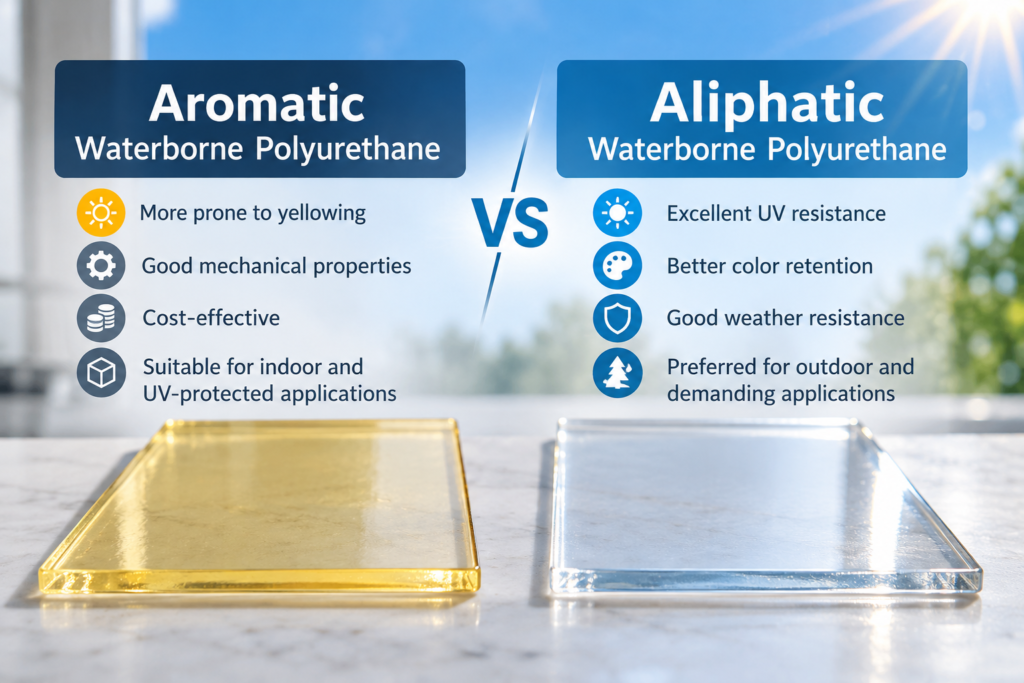
These enhancements result in materials with superior tensile strength, abrasion resistance, and chemical stability. Hydrophobic modifications further improve water resistance, making WPUs suitable for demanding environments such as marine and industrial applications.
Nanocomposite WPUs, in particular, have demonstrated exceptional performance gains. The addition of nanoparticles not only strengthens the polymer matrix but also introduces functional properties such as UV resistance and thermal stability.
Transitioning to Smart and Functional Applications

One of the most exciting developments in WPU research is the emergence of smart materials. By integrating functional additives and responsive chemical groups, researchers are transforming WPUs into adaptive systems capable of responding to environmental stimuli.
Examples of smart WPU applications include:
- Self-healing coatings that repair microcracks through reversible chemical bonds
- Anti-fouling and antimicrobial surfaces for healthcare and marine use
- Conductive coatings for flexible electronics and wearable devices
These innovations are enabled through the incorporation of nanotechnology and functional chemistry into the polymer backbone. For instance, embedding conductive fillers such as carbon nanotubes allows WPUs to function as sensors, opening new possibilities in structural health monitoring.
In the energy sector, WPUs are being explored for use in lithium-ion batteries and energy storage systems. Their flexibility, adhesion properties, and electrochemical stability make them suitable for next-generation battery components.
Expanding Industrial and Cross-Sector Applications
The versatility of WPUs has enabled their adoption across a wide range of industries. Their tunable properties make them suitable for both traditional and emerging applications.
Construction and Infrastructure
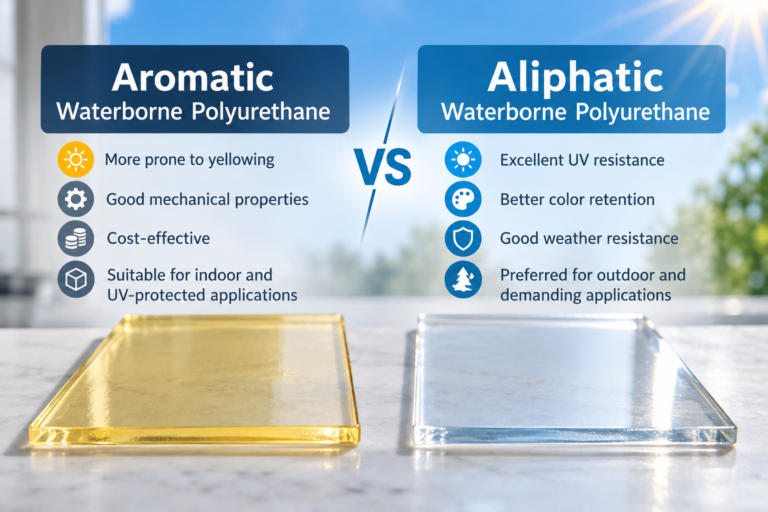
WPUs are widely used in protective coatings for buildings, bridges, and pipelines. Their resistance to weathering, corrosion, and UV exposure makes them ideal for long-term durability.
Automotive and Marine
In automotive and marine environments, WPUs provide lightweight, flexible coatings that resist abrasion and corrosion. Their low environmental impact aligns with sustainability goals in these industries.
Textiles and Leather
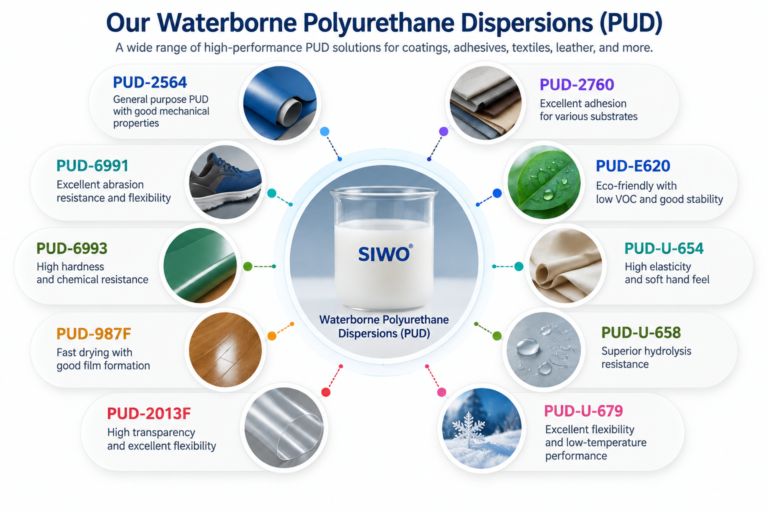
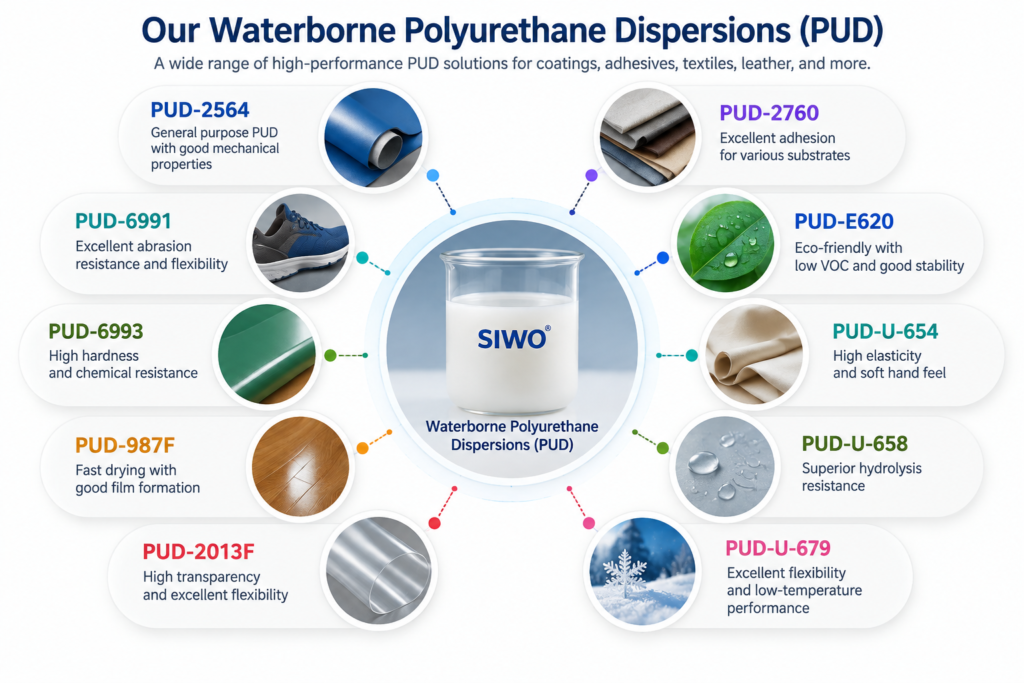
WPUs are increasingly used in textile coatings and synthetic leather production, offering breathable, flexible, and eco-friendly alternatives to conventional materials.
Electronics and Energy
The integration of WPUs into electronic devices and energy systems highlights their multifunctional potential. From flexible circuits to battery components, WPUs are supporting innovation in high-tech applications.
Challenges and Ongoing Research Directions
Despite significant advancements, several challenges remain in the development and commercialization of next-generation WPUs. One of the primary issues is balancing biodegradability with durability. Materials that degrade too quickly may not meet performance requirements, while highly durable systems may compromise environmental benefits.
Cost is another critical factor. Bio-based raw materials and advanced nanomaterials can increase production costs, limiting scalability. Researchers are actively exploring cost-effective synthesis methods and alternative feedstocks to address this issue.
Future research directions include:
- Development of fully biodegradable yet high-performance WPUs
- Integration of artificial intelligence for material design and optimization
- Enhanced recyclability and circular economy approaches
- Advanced smart functionalities for real-time monitoring and response
Conclusion
Next-generation waterborne polyurethanes represent a convergence of sustainability, performance, and innovation. Through advancements in polymer chemistry, nanotechnology, and smart material design, WPUs are evolving into multifunctional systems capable of addressing complex industrial challenges.
As regulatory frameworks tighten and demand for sustainable materials grows, WPUs are positioned to play a central role in the future of materials science. Their ability to combine environmental responsibility with advanced functionality ensures their relevance across industries ranging from construction to electronics and beyond.
Organizations investing in WPU research and application today are not only addressing current sustainability goals but also laying the groundwork for the intelligent materials of tomorrow.
Advance Innovation with High-Performance Waterborne Polyurethanes from SIWO US
Partner with SIWO US to source advanced waterborne polyurethane dispersions and PUD resins engineered for industrial coatings, textiles, and high-performance adhesive applications. Contact now to explore a range of quality WPUs.