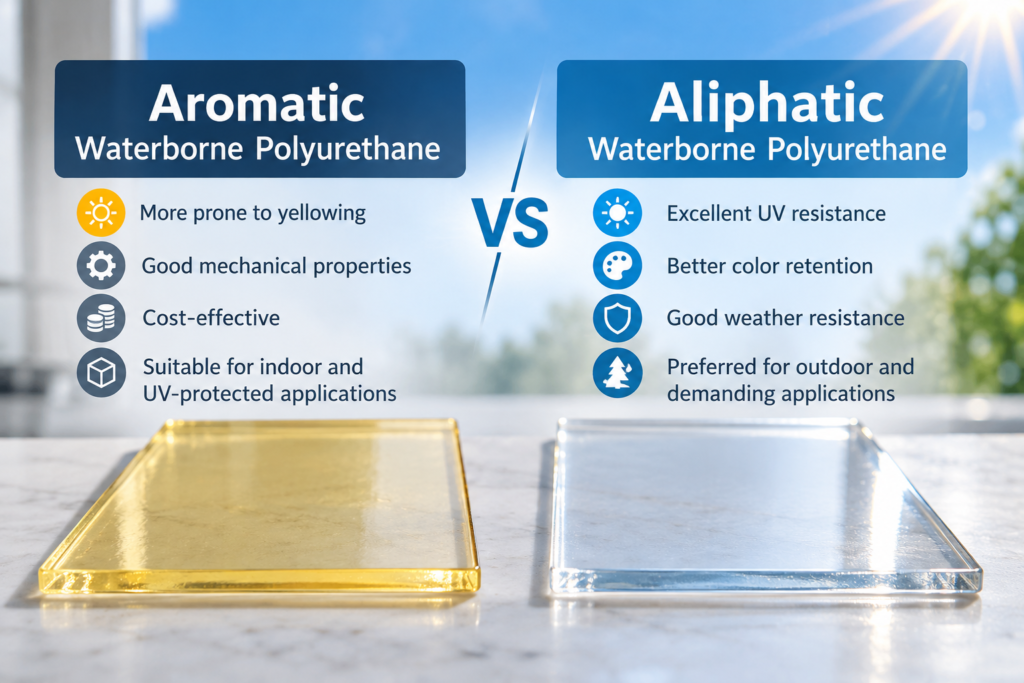
Aromatic vs. aliphatic polyurethane is an important consideration when selecting a waterborne polyurethane (WPU) dispersion for coatings, synthetic leather, textiles, adhesives, and other applications. The choice affects UV stability, color retention, and suitability for different end uses.
Although both aromatic and aliphatic polyurethane chemistries can produce high-performance films, aromatic vs. aliphatic polyurethane selection often comes down to UV exposure, color stability, and the requirements of the finished product. Understanding these differences helps formulators narrow down suitable waterborne polyurethane options before application testing.
What Is the Difference Between Aromatic and Aliphatic Polyurethane?
The distinction comes from the chemical structure of the isocyanate used to make the polyurethane.
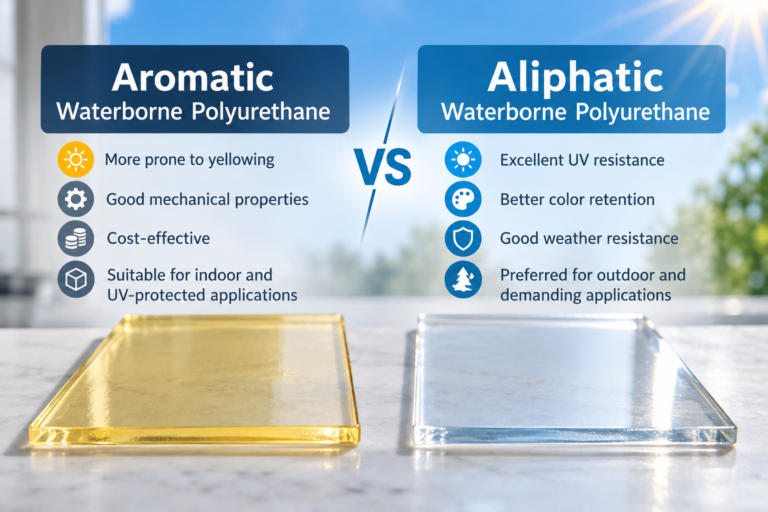
Aromatic polyurethane is made using an aromatic isocyanate containing an aromatic ring structure. Aromatic polyurethane chemistry is widely used in applications where mechanical performance and cost are important considerations. However, aromatic structures can be more susceptible to UV-induced discoloration.
Aliphatic polyurethane is made using an aliphatic or cycloaliphatic isocyanate. These chemistries are generally selected when improved resistance to UV-related yellowing and better long-term color retention are important.
The final properties depend on the entire formulation—not just the isocyanate type. Polyol chemistry, molecular structure, additives, crosslinking, film thickness, and curing conditions can all influence the performance of the finished coating.
Aromatic vs. Aliphatic Waterborne Polyurethane: Key Differences
1. Aromatic vs. Aliphatic Polyurethane: UV Resistance and Yellowing
UV exposure is an important consideration when comparing aromatic vs. aliphatic polyurethane for coatings used outdoors or in applications exposed to sunlight.
Aromatic polyurethane systems generally have a greater tendency to yellow or change color under UV exposure. This can be a concern for white, light-colored, transparent, or decorative finishes where appearance must remain consistent.
Aliphatic polyurethane systems generally offer better UV stability and resistance to yellowing. They are often preferred for exterior coatings and finishes where color retention is a priority.
Actual weathering performance should still be verified through testing under conditions relevant to the intended application.
2. Color and Appearance
For clear coats, white coatings, and light-colored finishes, discoloration can affect the appearance of the final product.
Aliphatic waterborne polyurethane is often a suitable starting point when long-term color stability is important. Aromatic polyurethane may remain appropriate for applications where color change is less critical or where the material is protected from significant UV exposure.
Formulators should evaluate the complete coating system, including pigments, additives, substrates, and any topcoat, rather than relying on resin chemistry alone.
3. Mechanical and Chemical Performance
Neither aromatic nor aliphatic chemistry automatically guarantees better overall mechanical or chemical performance.
Tensile strength, elongation, hardness, abrasion resistance, water resistance, solvent resistance, and adhesion depend on the polymer structure and formulation. The choice of polyol—such as polyester, polyether, or polycarbonate—also influences the final film properties.
For this reason, two dispersions from the same broad chemistry category may perform differently. Product selection should be based on the requirements of the finished film and validated through laboratory testing.
4. Cost and Application Requirements
Cost is one consideration when comparing polyurethane dispersions, but it should not be the only selection criterion.
For applications where color stability and outdoor durability are essential, an aliphatic dispersion may offer advantages that justify its use. For applications where UV exposure is limited and appearance requirements are less demanding, other polyurethane chemistries may also be worth evaluating.
The most appropriate choice balances performance requirements, processing conditions, substrate compatibility, and total formulation cost.
How to Choose the Right Waterborne Polyurethane
Before selecting an aromatic or aliphatic waterborne polyurethane, consider the following questions:
- Will the finished product be exposed to sunlight? Outdoor exposure and UV requirements can help determine whether aliphatic chemistry is preferable.
- Is long-term color retention important? Clear, white, and light-colored finishes typically require careful evaluation of yellowing resistance.
- What mechanical properties are required? Define the target hardness, elongation, tensile strength, flexibility, and abrasion resistance.
- What chemical and environmental resistance is needed? Consider water, cleaning agents, solvents, heat, humidity, and other expected service conditions.
- Which substrate will be coated? Adhesion and film formation should be tested on the actual substrate.
- Will the formulation use a crosslinker? For two-component systems, evaluate pot life, curing conditions, and the resulting film properties.
Comparing technical data sheets is a useful first step, but application-specific testing is necessary before finalizing a resin selection.
Examples of Aliphatic Waterborne Polyurethane Dispersions from SIWO
SIWO’s product catalogue includes several aliphatic waterborne polyurethane dispersions for different performance requirements.
- PUE-3060: An aliphatic/polycarbonate dispersion listed for elastic coating applications. SIWO’s catalogue describes its coating as having excellent UV resistance, weather resistance, water resistance, and abrasion resistance.
- PUD-1620X: An aliphatic/polycarbonate dispersion designed for hard, tough films. Its listed application areas include metal, glass, wood, and industrial coatings.
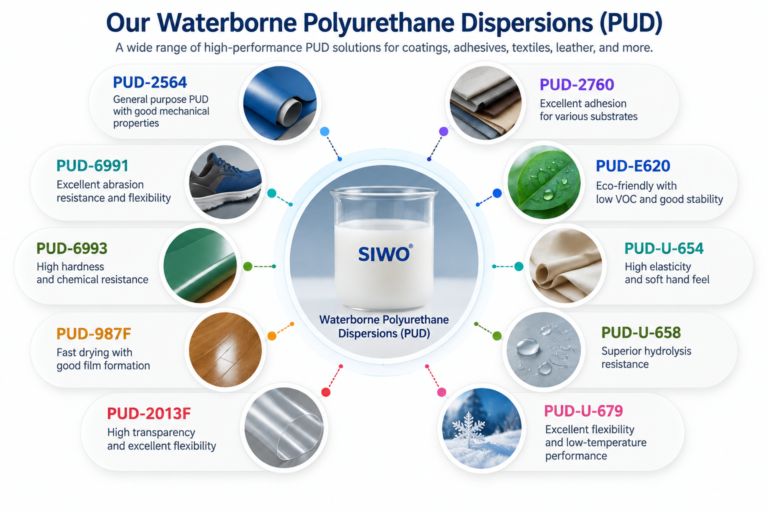
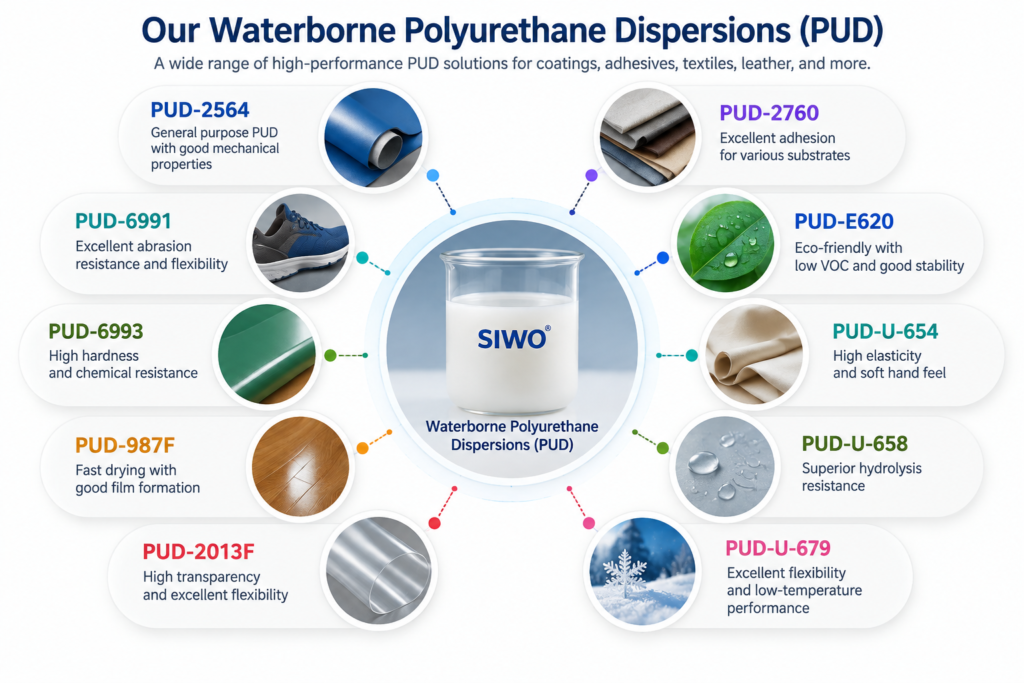
- PUD-E620: An aliphatic/polycarbonate dispersion whose film properties include water resistance, abrasion resistance, lightfastness, and hydrolysis resistance. Listed application areas include leather, rubber, and film substrates.
These examples illustrate that aliphatic polyurethane dispersions can serve different purposes depending on their polymer structure and target application. They are not interchangeable, and the appropriate grade should be selected based on the required performance and processing conditions.
For current specifications, please consult the relevant SIWO technical data sheet and confirm suitability through testing.
Conclusion
The main difference between aromatic and aliphatic waterborne polyurethane is their chemical structure and the resulting performance trade-offs. Aliphatic polyurethane is generally favored when UV stability and resistance to yellowing are important, while the best choice for mechanical properties, chemical resistance, and cost depends on the specific formulation.
For formulators, the most reliable selection process starts with the end-use requirements, compares the technical data for candidate dispersions, and validates performance on the intended substrate under realistic conditions.
Explore SIWO’s waterborne polyurethane products or read our guide to polyurethane dispersion (PUD) to learn more about polyurethane dispersion chemistry and applications.