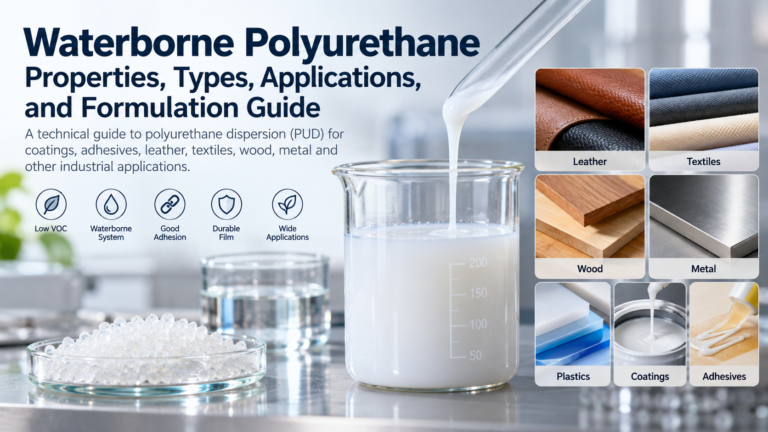
Understanding polyester vs polyether vs polycarbonate PUD starts with the polyol chemistry behind the dispersion. Polyester, polyether, and polycarbonate polyurethane dispersions can provide very different combinations of flexibility, hardness, adhesion, water resistance, hydrolysis resistance, and durability.
For formulators and coating manufacturers, the best choice depends on the final application rather than on one property alone. Polyester PUDs can be useful when mechanical strength, hardness, and adhesion are priorities. Polyether PUDs are often selected for flexibility, elasticity, and resistance to hydrolysis. Polycarbonate PUDs are commonly considered when water resistance, hydrolysis resistance, weatherability, and long-term durability are important.
This guide compares polyester, polyether, and polycarbonate polyurethane dispersions and explains how their chemistry can influence performance and application selection.
Polyester vs. Polyether vs. Polycarbonate PUDs: What Is the Difference?
The main difference between polyester, polyether, and polycarbonate polyurethane dispersions comes from the polyol structure used to build the polyurethane backbone. This chemistry influences the balance of mechanical strength, flexibility, adhesion, water resistance, hydrolysis resistance, weatherability, and overall durability.
Polyester Polyurethane Dispersions
Polyester polyurethane dispersions are often selected when mechanical strength, hardness, adhesion, and balanced film performance are important. Depending on the specific polyester structure and formulation, polyester PUDs can range from relatively soft and flexible grades to harder coating resins.
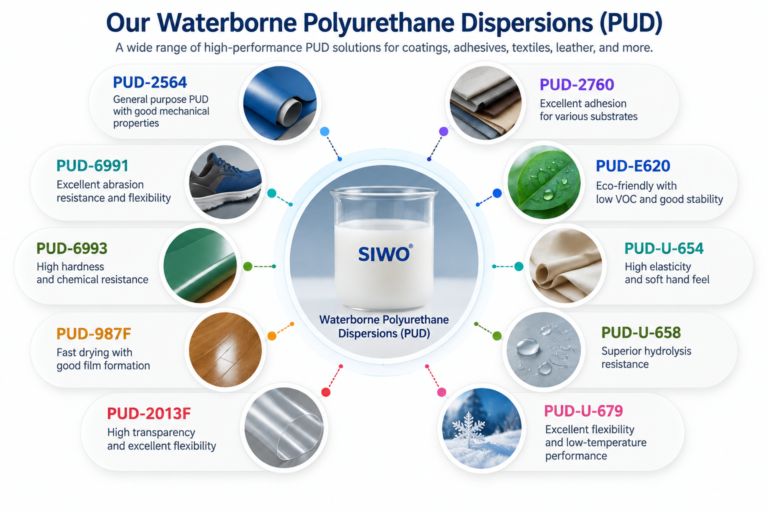
In practical applications, polyester PUDs are used in areas such as coatings, printing inks, adhesives, leather finishing, and surface treatment. SIWO’s product portfolio includes polyester-based PUDs designed for different performance requirements, including grades offering high hardness, abrasion resistance, adhesion, and water resistance.
Polyether Polyurethane Dispersions
Polyether polyurethane dispersions are often chosen when flexibility, elasticity, and resistance to hydrolysis are important. They can provide soft, resilient films and are useful in applications where repeated flexing or movement is expected.
SIWO’s polyether-based PUD portfolio includes grades designed for textile coatings, leather applications, printing coatings, and other flexible coating systems. For example, several polyether grades in the SIWO catalog show high elongation together with soft, resilient films and good water or alkali resistance.
Polycarbonate Polyurethane Dispersions
Polycarbonate polyurethane dispersions are often selected when higher durability and resistance to demanding environments are important. They can provide a useful combination of mechanical performance, water resistance, hydrolysis resistance, abrasion resistance, and weatherability.
SIWO’s polycarbonate-based PUD portfolio includes grades for leather, plastic, metal, wood, and industrial coating applications. For example, PUD-994F offers excellent water resistance, adhesion, abrasion resistance, weather resistance, and hydrolysis resistance, while PUD-1620X is designed for hard, tough films with high heat, abrasion, weather, stain, solvent, and chemical resistance.
Polyester vs Polyether vs Polycarbonate PUDs: How They Compare
The three PUD chemistries should not be viewed as a simple ranking from “better” to “worse.” Each can be advantageous depending on the performance requirements of the finished coating, adhesive, ink, or other formulation.
Polyester PUDs: A good choice when mechanical strength, hardness, adhesion, and balanced film performance are important.
Polyether PUDs: A strong option when flexibility, elasticity, resilience, and resistance to hydrolysis are important.
Polycarbonate PUDs: Often preferred for demanding applications where water resistance, hydrolysis resistance, abrasion resistance, weatherability, and long-term durability are priorities.
How to Choose the Right PUD Chemistry
The right PUD chemistry should be selected based on the most important performance requirements of the final application. Consider the following factors before choosing a polyester, polyether, or polycarbonate dispersion.
For mechanical strength and adhesion: Polyester-based PUDs are often a practical starting point when hardness, mechanical strength, and substrate adhesion are important.
For flexibility and repeated movement: Polyether-based PUDs are often more suitable for soft, elastic, and flexible films.
For water and hydrolysis resistance: Polycarbonate-based PUDs can be a strong choice when resistance to water and long-term hydrolysis is important.
For demanding outdoor or industrial applications: Polycarbonate-based systems may be preferred when weatherability, abrasion resistance, chemical resistance, and long-term durability are major requirements.
For balanced performance: Hybrid systems, such as polyester-carbonate or polyether-carbonate PUDs, can be considered when a single chemistry does not provide the desired combination of properties.
Polyester vs. Polyether vs. Polycarbonate PUD: Quick Comparison
| Chemistry | Main strengths | Typical considerations | Good fit |
|---|---|---|---|
| Polyester | Strength, hardness, adhesion | Balanced flexibility and hardness | Coatings, adhesives, inks |
| Polyether | Flexibility, elasticity, resilience | Often softer and more flexible | Flexible coatings, textiles, leather |
| Polycarbonate | Water, hydrolysis, abrasion, weather resistance | Often selected for higher durability | Industrial, outdoor, leather, wood |
Polyester vs. Polyether vs. Polycarbonate: Key Takeaways
Polyester PUDs are often a good choice when mechanical strength, hardness, and adhesion are the main priorities.
Polyether PUDs are commonly selected for flexibility, elasticity, resilience, and resistance to hydrolysis.
Polycarbonate PUDs are generally considered when water resistance, hydrolysis resistance, abrasion resistance, weatherability, and long-term durability are more demanding requirements.
The best choice depends on the complete performance target. In some formulations, hybrid polyol systems such as polyester-polycarbonate or polyether-polycarbonate can provide a more balanced combination of properties.
Choosing the Right PUD for Your Application
Selecting a polyurethane dispersion should start with the performance requirements of the finished product rather than the resin chemistry alone. Consider the required balance of hardness, flexibility, adhesion, water resistance, hydrolysis resistance, abrasion resistance, weatherability, and durability. Polyester, polyether, and polycarbonate PUDs each offer different performance advantages, while hybrid systems can provide additional flexibility in formulation design. When selecting a grade, also consider the substrate, application method, drying conditions, solids content, and required film properties.