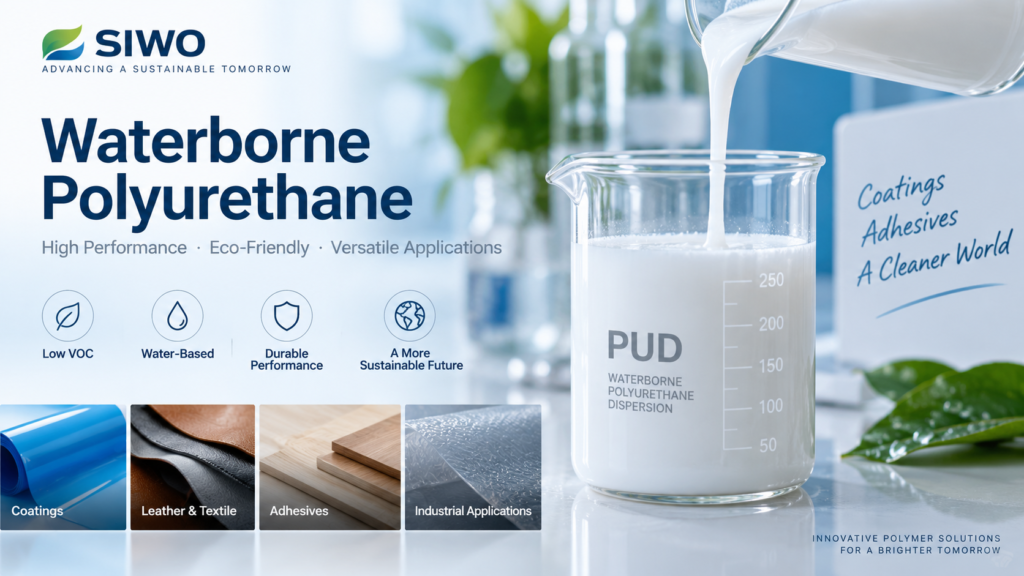
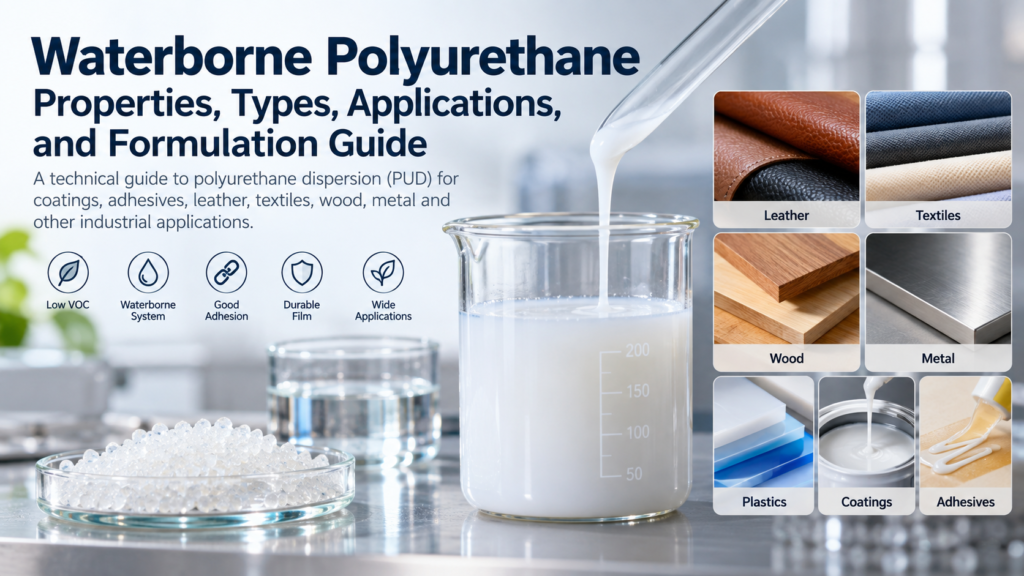
Polyurethane dispersion (PUD) is a waterborne polyurethane system in which polyurethane polymer is dispersed in water to form a stable aqueous dispersion. PUDs are widely used in coatings, adhesives, leather finishing, textiles, plastics, wood, metal treatment, and other industrial applications.
Unlike a single-purpose resin, polyurethane dispersions can be designed with different polymer chemistries and structures to provide different combinations of flexibility, hardness, adhesion, abrasion resistance, water resistance, chemical resistance, and other performance characteristics.
The choice of PUD therefore depends on the substrate, application method, film requirements, processing conditions, and final performance requirements. SIWO’s polyurethane dispersion portfolio includes different polyurethane chemistries and grades designed for applications ranging from leather and textile treatment to industrial coatings, wood sealers, metal surface treatment, and adhesives.
This guide explains what polyurethane dispersion is, how PUD systems work, the major types of polyurethane dispersion, their key properties, common applications, and the factors formulators should consider when selecting a PUD.
Table of Contents
ToggleWhat Is PUD?
Polyurethane dispersion (PUD) is a polyurethane polymer system supplied as an aqueous dispersion. Instead of using an organic solvent as the primary liquid medium, the polyurethane is dispersed in water.
The polyurethane particles are stabilized within the aqueous phase so the dispersion can be processed and applied using conventional coating, adhesive, textile, leather, wood, plastic, and other industrial application methods.
After application, water evaporates and the polyurethane particles come together to form a continuous polymer film. The final film properties depend on the polyurethane chemistry, molecular structure, particle characteristics, solids content, crosslinking, and drying conditions.
PUDs can be formulated to provide different balances of flexibility, hardness, adhesion, abrasion resistance, water resistance, chemical resistance, and other performance characteristics. This flexibility is one reason polyurethane dispersions are used across a wide range of industrial applications.
How Does PUD Work?
Polyurethane dispersion works by combining polyurethane polymer chemistry with water as the dispersion medium. The polyurethane is manufactured and structured so that the polymer can remain dispersed in water rather than separating immediately.
During application, the PUD is deposited onto the substrate as a water-based coating or adhesive layer. As water leaves the system during drying, the dispersed polyurethane particles move closer together and begin to form a continuous film.
The final film is influenced by the polymer’s molecular structure, particle size, solids content, soft and hard segments, ionic or hydrophilic groups, and crosslinking design. Drying temperature, humidity, film thickness, and substrate characteristics can also affect film formation.
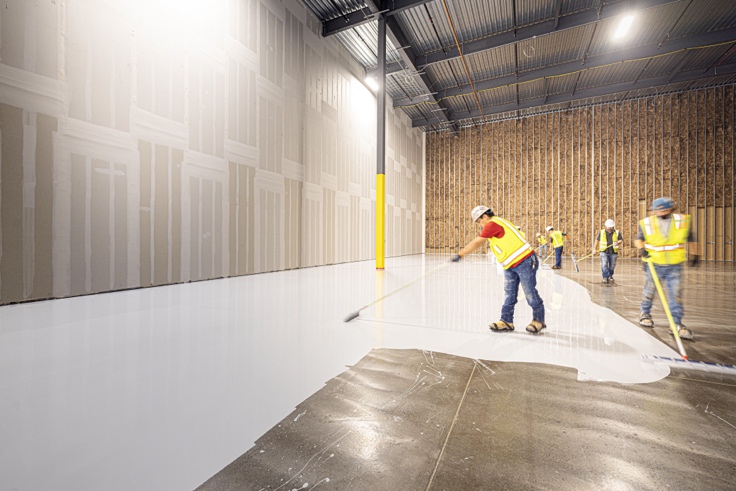
Because different polyurethane structures produce different performance characteristics, a PUD that works well for one application may not be suitable for another. For example, a formulation designed for a flexible leather coating may have different requirements from one designed for a hard protective coating on metal or concrete.
For this reason, PUD selection should begin with the performance requirements of the finished application rather than simply choosing a product based on one specification such as hardness or solids content.
Types of Polyurethane Dispersion
Polyurethane dispersions can be classified in several ways, including by the chemistry of the soft segment, ionic character, and overall polymer structure. These differences can influence flexibility, hardness, hydrolysis resistance, adhesion, chemical resistance, weathering behavior, and other performance characteristics.
Polyester polyurethane dispersions
Polyester-based PUDs are commonly selected when a balance of mechanical strength, adhesion, and film performance is required. Depending on the polyester structure, they can provide useful combinations of hardness, flexibility, abrasion resistance, and chemical resistance.
Polyether polyurethane dispersions
Polyether-based PUDs can offer good flexibility and resistance to hydrolysis. They may be considered for applications where flexibility and durability in humid or wet environments are important.
Polycarbonate polyurethane dispersions
Polycarbonate-based PUDs are used when higher-performance properties are required. Depending on the specific polymer design, they can provide combinations of mechanical durability, hydrolysis resistance, chemical resistance, and weathering performance.
Cationic polyurethane dispersions
Cationic PUDs contain positively charged ionic groups that help stabilize the polyurethane dispersion in water. Their ionic character can also influence interaction with certain substrates and formulation components.
Anionic and nonionic polyurethane dispersions
Anionic PUDs use negatively charged ionic groups to help stabilize the dispersion, while nonionic systems rely on nonionic hydrophilic structures rather than ionic stabilization. The choice can affect compatibility, formulation behavior, substrate interaction, and final coating performance.
Key Properties of Polyurethane Dispersion
The properties of a polyurethane dispersion depend on the polymer chemistry, molecular structure, particle characteristics, solids content, ionic groups, and crosslinking design. The same general PUD category can therefore produce significantly different performance depending on how the polymer is engineered.
Adhesion
PUDs can provide adhesion to substrates such as leather, textiles, plastics, wood, paper, glass, and metal. Adhesion depends on both the polyurethane chemistry and the surface being coated. Surface energy, cleanliness, polarity, drying conditions, and formulation components can all affect the final bond.
Flexibility and hardness
Polyurethane chemistry allows formulators to balance flexibility and hardness. Soft-segment structure, hard-segment content, molecular weight, and crosslink density can influence the mechanical properties of the dried film.
Abrasion and mechanical resistance
Properly designed polyurethane films can provide resistance to wear, scratching, and mechanical damage. The level of resistance depends on polymer structure, crosslinking, film formation, and the conditions of the intended application.
Water and chemical resistance
Water and chemical resistance are important considerations for many PUD applications. The final resistance depends on the polyurethane chemistry, hydrophilic structure, crosslinking, film formation, and formulation design.
Drying and film formation
PUD performance also depends on how effectively the dispersion forms a continuous film after application. Temperature, humidity, film thickness, substrate characteristics, and polymer design can influence the film-formation process.
Because these properties are interconnected, PUD selection should be based on the complete performance requirements of the application rather than a single specification.
Applications of Polyurethane Dispersion
Polyurethane dispersions are used across a wide range of industrial applications because their chemistry can be tailored to provide different combinations of adhesion, flexibility, hardness, abrasion resistance, and resistance to water and chemicals.
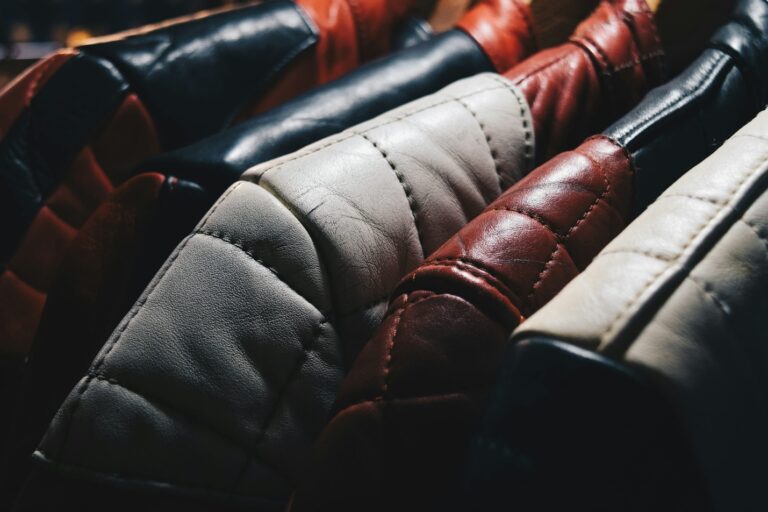
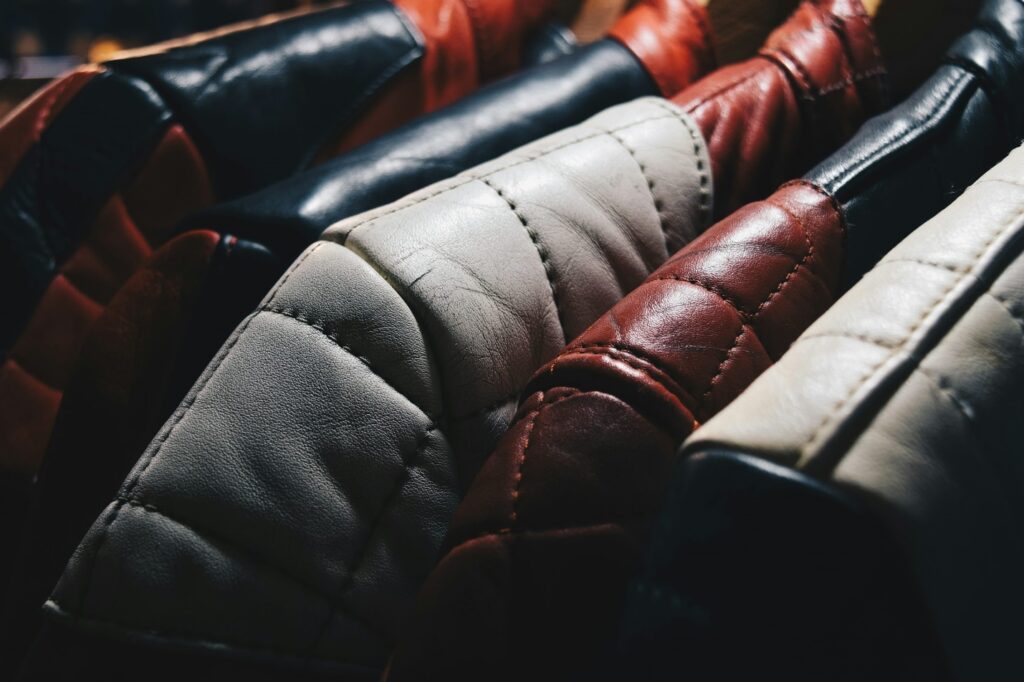
Leather coatings and finishing
PUDs can be used in leather finishing systems where flexibility, adhesion, abrasion resistance, surface appearance, and resistance to water or chemicals are important. The appropriate polymer design depends on the type of leather and the required finish.
Textile applications
Polyurethane dispersions can be used in textile-related applications where flexibility, film formation, adhesion, and resistance to washing or mechanical stress are important.
Wood coatings and sealers
Waterborne polyurethane systems can be used for wood coatings and sealers. Depending on the PUD chemistry, formulators may target properties such as adhesion, hardness, flexibility, abrasion resistance, and appearance.
Metal surface treatment
PUDs can also be used for metal surface treatment and protective coating applications. The required properties may include adhesion to the metal substrate, corrosion-related performance, mechanical resistance, and water or chemical resistance.
Plastic coatings
Polyurethane dispersions can provide adhesion and flexible film formation on selected plastic substrates. Surface preparation and substrate compatibility should be evaluated because different plastics can have significantly different surface characteristics.
Adhesives
PUDs can serve as polymer components in waterborne adhesive systems. Depending on the polymer structure, they can provide combinations of adhesion, flexibility, mechanical strength, and resistance properties.
Other industrial applications
Additional applications can include glass fiber sizing, industrial coatings, and other specialized surface-treatment systems. Product selection should be based on the requirements of the specific substrate, processing method, and finished product.
How to Select the Right PUD
Selecting a polyurethane dispersion should begin with the requirements of the finished application. There is no single PUD that provides the same performance across every substrate and processing condition.
1. Identify the substrate
Start by determining what material will be coated, bonded, or treated. Leather, textiles, wood, plastics, metal, glass, and other substrates can require different adhesion and film-performance characteristics.
2. Define the required film properties
Consider whether the finished film needs to be flexible or hard, highly abrasion resistant, water resistant, chemically resistant, or capable of maintaining adhesion under repeated mechanical stress.
3. Consider the PUD chemistry
Polyester, polyether, polycarbonate, cationic, anionic, and nonionic polyurethane dispersions can provide different performance characteristics. The chemistry should be matched to the requirements of the application rather than selected only by product category.
4. Review physical specifications
Important specifications can include solids content, viscosity, pH, particle size, appearance, drying time, and mechanical stability. These properties can affect handling, formulation, application, and storage.
5. Evaluate formulation compatibility
If the PUD will be combined with pigments, fillers, additives, crosslinkers, or other resins, compatibility should be evaluated before production. An additive or resin that performs well with one polyurethane dispersion may not produce the same result with another.
6. Test under actual application conditions
Laboratory testing should evaluate the properties that matter to the final application. Depending on the intended use, testing may include adhesion, abrasion resistance, water resistance, chemical resistance, flexibility, hardness, appearance, and storage stability.
The most appropriate polyurethane dispersion is therefore the one that provides the required balance of performance, processing characteristics, compatibility, and overall formulation requirements.
PUD Formulation Considerations