Global industries are undergoing a critical shift. As regulations tighten and sustainability expectations rise, manufacturers must adopt materials that offer both technical excellence and reduced environmental impact. Polyurethane has long been the go-to solution for coatings, adhesives, films, and foams, but traditional solvent-based systems now face growing scrutiny due to high volatile organic compounds (VOC) emissions and worker exposure risks.
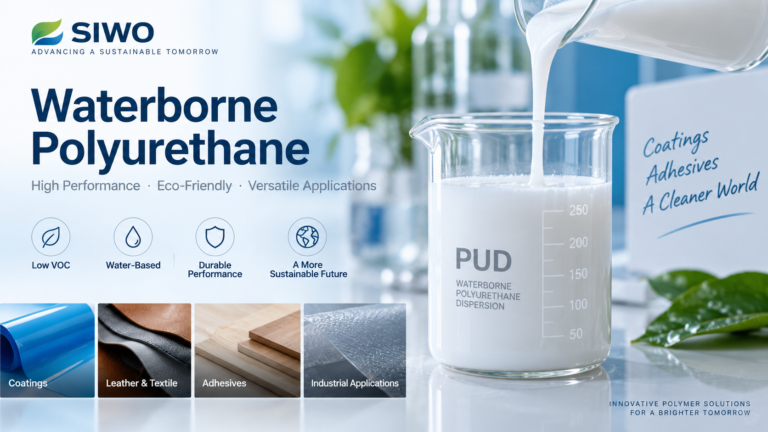
Waterborne polyurethane dispersions (WPUs) are emerging as a powerful alternative, delivering the same (or better) levels of performance while enabling compliance with global environmental standards such as REACH and the U.S. EPA Clean Air Act. As reported by the European Coatings Journal, the WPU market is expected to grow significantly, driven by demand in automotive, packaging, textiles, and construction sectors that prioritize low-emission formulations.
The Environmental Imperative: A Push for Safer Chemistry
Solvent-based polyurethanes contribute heavily to atmospheric VOCs, which play a role in forming ground-level ozone and smog. VOC exposure is also linked to respiratory issues, skin irritation, and long-term health effects, particularly for industrial workers. In contrast, waterborne polyurethane dispersions use water as the primary solvent, minimizing hazardous emissions and improving workplace safety.
Replacing solvent-borne systems with WPU technology can reduce VOC content by over 80% without compromising mechanical performance. Furthermore, NMP-free and APEO-free WPU systems are available to meet increasingly strict global chemical compliance benchmarks.
Performance Without Compromise: Why Next-Gen WPUs Stand Out
Next-generation waterborne polyurethane dispersions have evolved far beyond early water-based coatings, which were often plagued by poor adhesion, weak abrasion resistance, and limited flexibility. Today, tailored WPU formulations can match or exceed the performance of solvent-based systems in nearly every metric:
- Adhesion & Compatibility:WPUs bond effectively with a wide range of substrates, including wood, metal, plastic, rubber, textiles, and composites.
- Abrasion & Scratch Resistance:Advances in particle size control and polymer backbone engineering enable WPUs to form highly durable films suitable for flooring, packaging, and automotive interiors.
- Flexibility & Tensile Strength:Polyurethane chains provide excellent elasticity, which is essential in textiles, flexible packaging, and elastomeric coatings.
- Barrier Properties:Specific WPU grades are engineered to resist water, oil, and gas transmission—ideal for food-safe packaging films and protective layers.
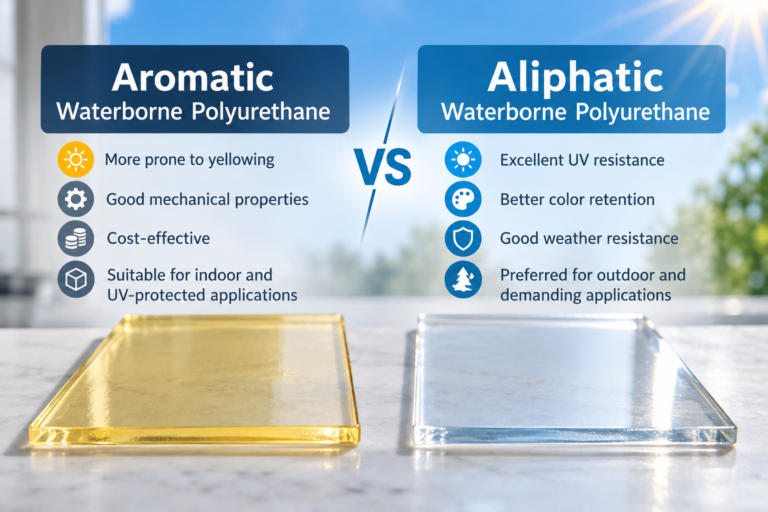
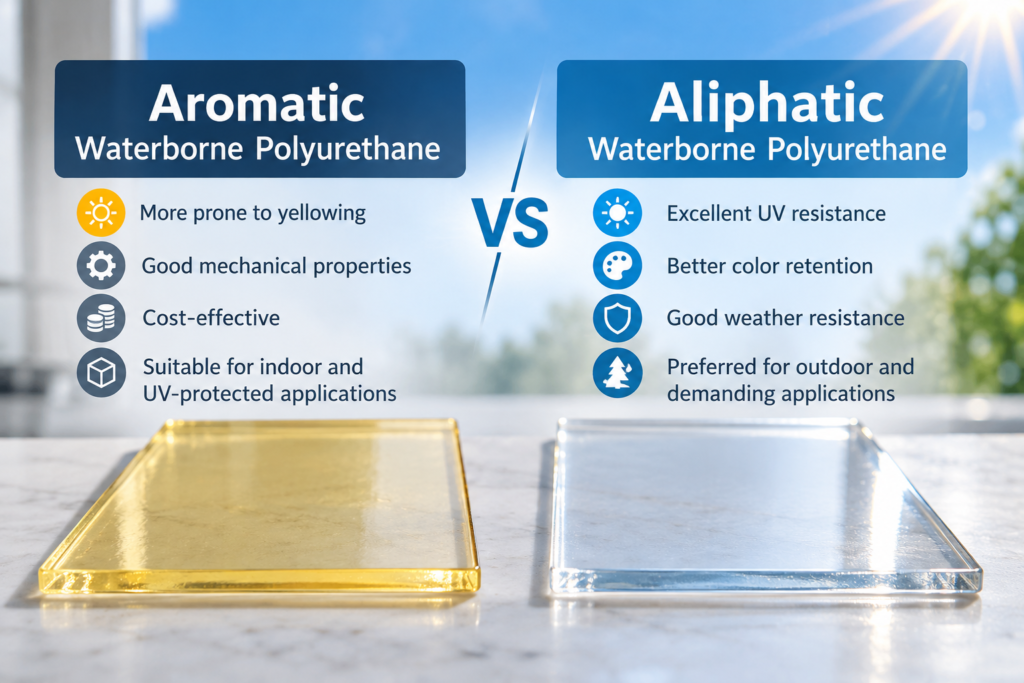
- UV & Chemical Resistance:UV-stabilized WPU grades extend product life cycles and maintain performance in harsh outdoor environments.
This leap in material science has enabled the adoption of WPUs in sectors that once relied exclusively on high-performance solvent-based options.
Cross-Sector Applications: WPUs in Action
The versatility of waterborne polyurethane systems is reflected in their growing role across multiple industries:
Textiles & Technical Fabrics
Modern apparel, outerwear, and coated textiles benefit from breathable, flexible, and lightweight coatings. WPUs offer an ideal balance between softness and durability, with additional resistance to hydrolysis and UV degradation. Brands prioritizing sustainable fashion are incorporating WPU-treated textiles to meet rising consumer expectations for non-toxic and eco-friendly garments.
Industrial Coatings
Waterborne PUDs provide corrosion resistance, gloss control, and chemical resilience for metal and wood substrates. They’re increasingly replacing alkyd and epoxy systems in furniture, appliances, and general metal coatings. Studies show WPU-based metal coatings can achieve comparable salt spray resistance and hardness to solvent-borne systems with significantly lower environmental impact.
Flexible Packaging
In packaging films and laminates, WPUs enhance sealability, ink adhesion, and moisture resistance while keeping total VOC content to a minimum. According to research from Polymer-Plastics Technology and Materials, WPU-coated films demonstrate improved performance in thermal sealing and recyclability—two key concerns for sustainable packaging design.
Inks & Printing
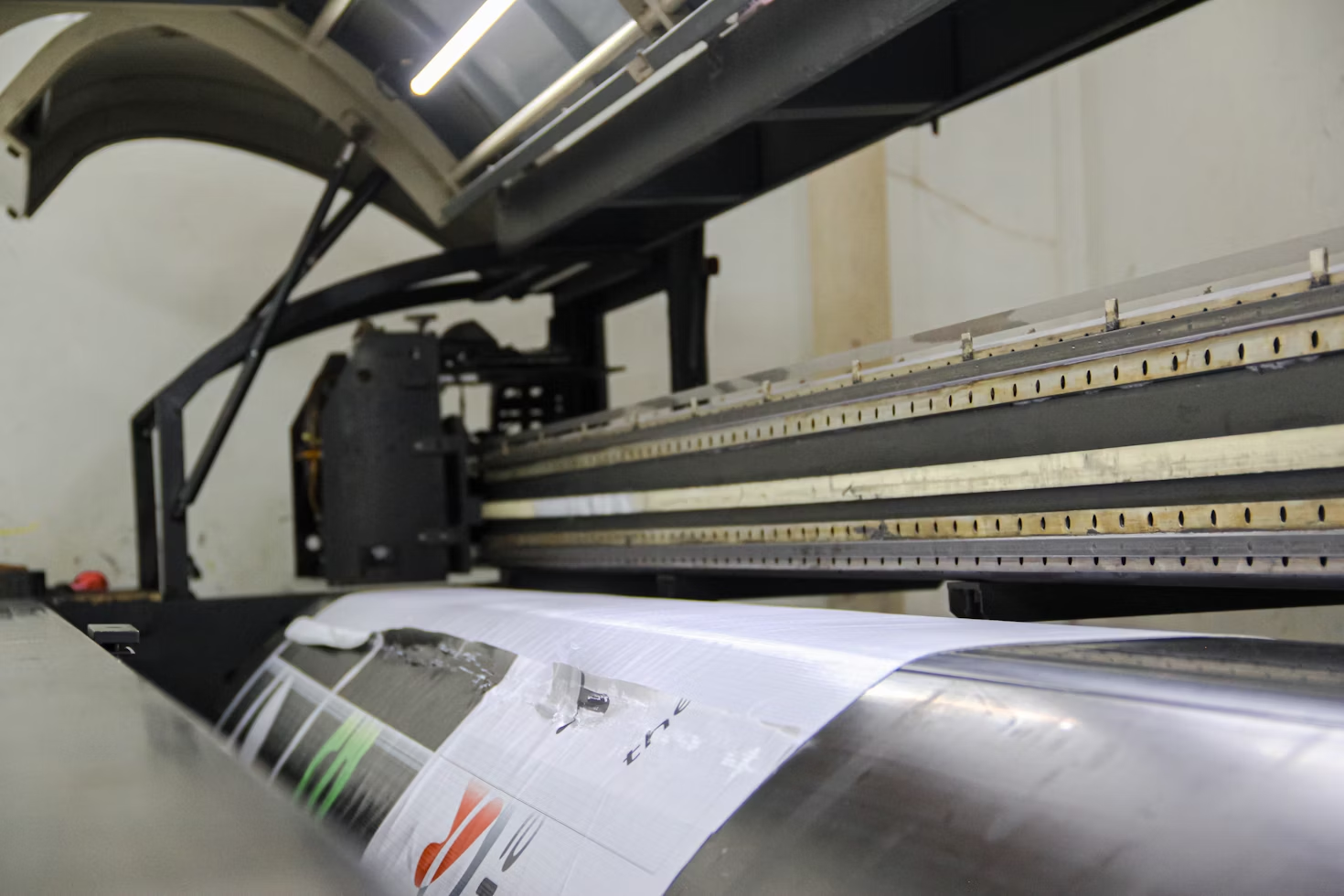
Cationic and anionic WPUs are now integral to inkjet printing and graphic arts. Their ability to stabilize pigments, support high-resolution image transfer, and improve smudge resistance is helping drive innovation in digital packaging and textile printing.
Automotive & Transportation
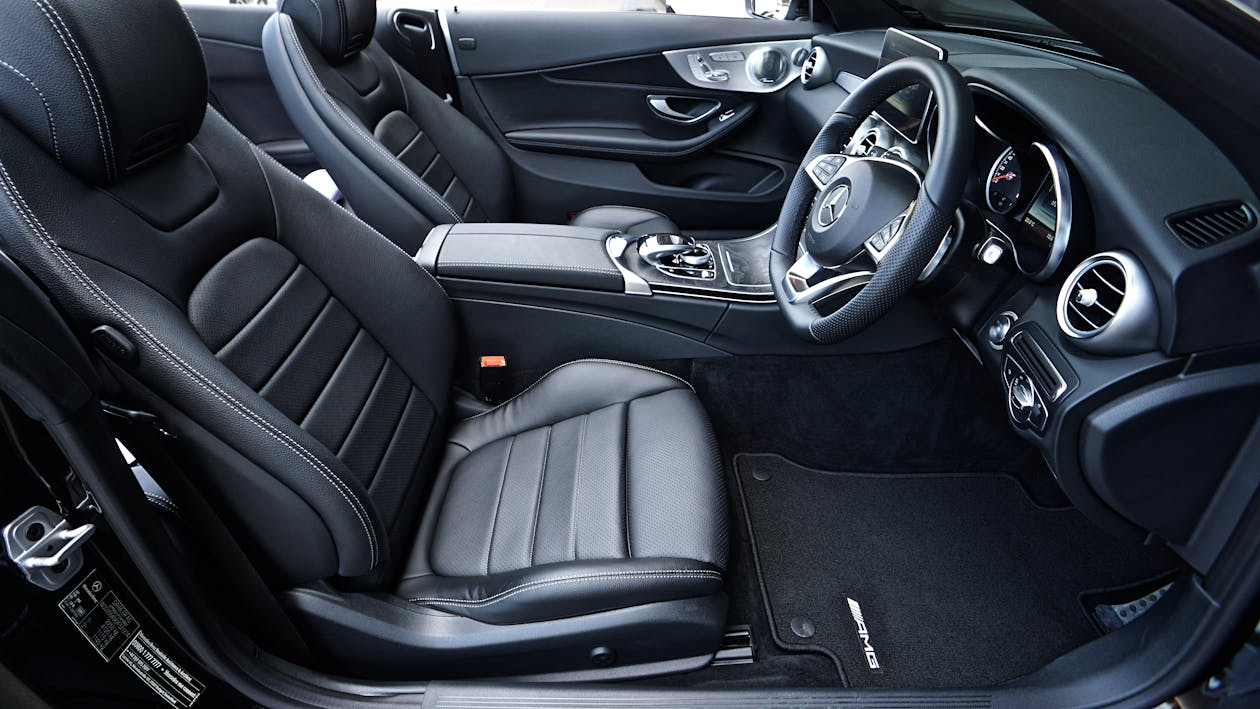
From sound-damping foams to abrasion-resistant interior coatings, WPUs are delivering performance and weight reduction advantages. Their low-odor, fast-drying formulations are ideal for vehicle interiors, while UV- and solvent-resistant grades extend durability in exterior trim components.
A Customizable Platform for Innovation
Unlike off-the-shelf materials, next-generation WPUs offer a modular chemistry platform. Manufacturers can work with suppliers to adjust hardness, elongation, tackiness, or hydrophobicity to meet exact performance criteria.
For example:
- Self-matting WPU coatingscan replace multiple finishing steps in flooring applications.
- Cationic dispersionscan be designed for excellent ink adhesion on untreated substrates.
- Flame-retardant or antimicrobial additives can be integrated without disrupting film integrity.
This adaptability not only shortens R&D timelines but also allows for material consolidation, reducing SKUs and simplifying supply chains.
Building a Sustainable Future, One Molecule at a Time
Waterborne polyurethane dispersions don’t just represent a product innovation—they mark a paradigm shift in material science. By reducing environmental impact, supporting health-conscious workplaces, and enabling next-gen product design, WPUs align perfectly with ESG frameworks, regulatory targets, and consumer demands.
Manufacturers ready to transition toward greener operations will find in WPU not a compromise, but an opportunity: to elevate product performance while lowering their environmental footprint.
Partnering with SIWO US Inc.: Performance, Sustainability, and Expertise Combined
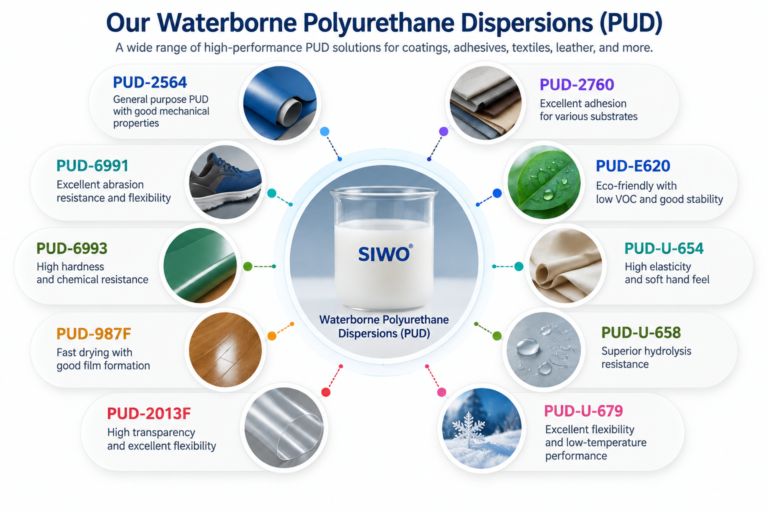
At SIWO US Inc., we lead the way in developing advanced waterborne polyurethane technologies for a range of applications—from textiles and coatings to adhesives, packaging, and ink systems. Our team of polymer scientists and application engineers work directly with clients to develop custom dispersions that meet exacting performance and sustainability targets.
With over two decades of innovation, global production capabilities, and a dedicated R&D infrastructure, we deliver more than materials—we deliver confidence in every layer.
Connect with SIWO to explore how our WPU solutions can transform your next project.