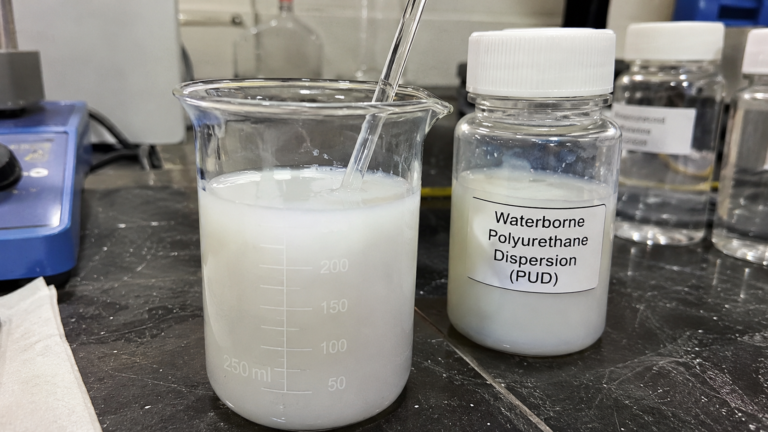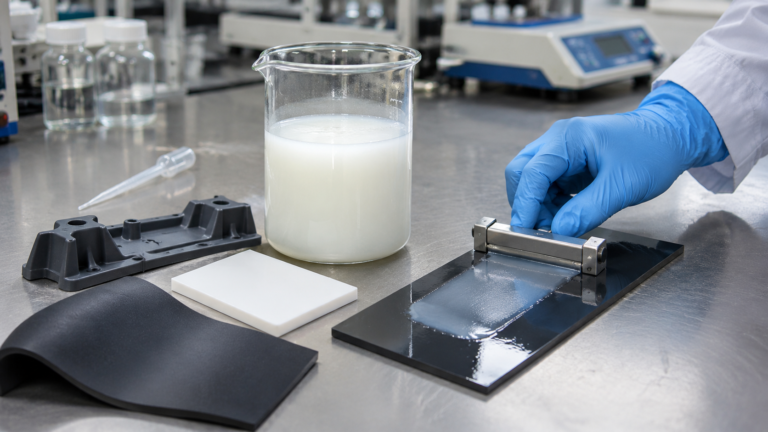
Waterborne polyurethane dispersions (PUDs) are widely used in modern coatings, textiles, synthetic leather, adhesives, and surface-finishing applications. Understanding polyurethane dispersion properties is essential for manufacturers and formulators seeking consistent coating performance and reliable application results.
Their ability to provide flexibility, abrasion resistance, adhesion, and chemical resistance while using water as the primary dispersion medium makes them an attractive alternative to many traditional solvent-based polyurethane systems.
However, not all waterborne polyurethane dispersions perform the same way. Even when two PUD products have similar solid contents or viscosities, their final coating performance can differ significantly.
Understanding the factors that influence PUD performance is essential for selecting the right material, optimizing formulations, and achieving consistent results in production.
In this article, we explore seven key factors that influence the performance of waterborne polyurethane dispersions.
1. Polymer Chemical Structure
The chemical structure of polyurethane is one of the most important factors determining its physical and mechanical properties. These polyurethane dispersion properties are largely determined by the selection of raw materials and the overall polymer composition.
Waterborne polyurethane dispersions are generally synthesized using different polyols, isocyanates, chain extenders, and hydrophilic components. The selection and proportion of these raw materials directly influence the properties of the resulting polymer.
Key structural components include:
- Polyol type: Polyether, polyester, and polycarbonate polyols provide different combinations of flexibility, hydrolysis resistance, chemical resistance, and mechanical strength.
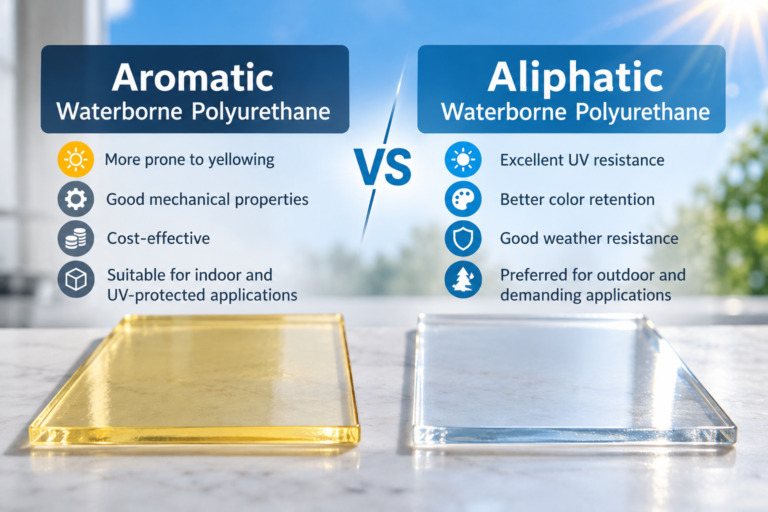
- Isocyanate type: Aromatic and aliphatic isocyanates influence mechanical properties, weatherability, and resistance to yellowing.
- Hard and soft segments: The balance between hard and soft segments affects hardness, elasticity, tensile strength, and elongation.
- Chain extenders: These influence molecular structure, hydrogen bonding, and the mechanical performance of the polymer.
For example, polyether-based polyurethane dispersions generally offer good flexibility and hydrolysis resistance, making them useful in applications exposed to moisture. Polyester-based PUDs can provide good mechanical strength, abrasion resistance, and adhesion, depending on their formulation.
Why it matters:
Selecting the appropriate polymer structure is the first step toward achieving the desired performance. A PUD designed for flexible textile coatings may not provide the same properties required for a hard protective coating.
For a broader technical understanding of waterborne polyurethane chemistry, synthesis, and applications, see this published research review.
2. Particle Size and Particle Size Distribution
Particle size is another important characteristic influencing the stability and application behavior of waterborne polyurethane dispersions.
PUDs consist of polyurethane polymer particles dispersed in water. Their particle size and distribution can influence several properties, including:
- Dispersion stability
- Appearance and transparency
- Viscosity and flow behavior
- Film formation
- Surface smoothness
Smaller particles can sometimes contribute to improved transparency and smoother films. However, particle size alone does not determine overall performance.
The particle size distribution, polymer chemistry, surface characteristics, and interactions between particles also play important roles.
Why it matters:
An appropriately designed particle system helps maintain dispersion stability and supports consistent coating application. An unsuitable particle structure may contribute to poor appearance, instability, or inconsistent film formation.
For formulators, particle size should be considered together with viscosity, solids content, and the intended application method.
Understanding these polyurethane dispersion properties helps manufacturers achieve better consistency in coating appearance and application performance.
3. Solid Content
Solid content represents the percentage of non-volatile material in a waterborne polyurethane dispersion.
It is an important specification because it influences material concentration, water content, drying requirements, and formulation efficiency.
For example:
- Higher solid content can reduce the amount of water that must evaporate during drying.
- Lower solid content may provide easier handling or formulation flexibility in certain applications.
- Different solid content levels may be suitable for different coating processes and application requirements.
However, higher solid content does not automatically mean better coating performance.
The final properties also depend on polymer composition, particle stability, film formation, and application conditions.
Why it matters:
Manufacturers should select solid content based on their production requirements, coating thickness, drying capacity, and desired application properties.
When comparing different PUD products, it is important to evaluate solid content alongside viscosity and mechanical performance rather than treating it as an independent indicator of quality.
4. pH and Neutralization System
The pH of a waterborne polyurethane dispersion plays an important role in maintaining dispersion stability.
Many PUD systems contain ionic or ionizable groups that help stabilize polyurethane particles in water. Neutralizing agents are used to adjust these groups and support dispersion stability.
Common neutralizing agents include:
- Triethylamine (TEA)
- Dimethylethanolamine (DMEA)
- Sodium hydroxide (NaOH)
- Other suitable inorganic or organic bases, depending on the formulation
The choice of neutralizing agent can influence the dispersion’s pH, compatibility, drying behavior, and final coating properties.
For applications requiring electrical insulation, chemical resistance, or specific formulation characteristics, the neutralization system deserves particular attention.
For example, sodium hydroxide and organic amines are not interchangeable in every PUD formulation. Their effects on polymer structure, ionic interactions, residual components, and final film properties should be evaluated experimentally.
Why it matters:
An unsuitable pH or neutralization system may negatively affect storage stability, compatibility, or coating performance.
Formulators should follow the manufacturer’s recommended pH range and avoid making significant pH adjustments without evaluating dispersion stability.
5. Viscosity and Rheological Properties
Viscosity determines how a waterborne polyurethane dispersion flows and behaves during processing and application.
It can influence:
- Pumping and material transfer
- Spraying and coating application
- Leveling and surface appearance
- Film thickness control
- Formulation compatibility
However, viscosity is not determined by solid content alone. Polymer molecular characteristics, particle interactions, particle size distribution, pH, and additives can all contribute to rheological behavior.
Different applications require different viscosity characteristics.
For example:
- Spray coating may require relatively low viscosity for proper atomization.
- Roller coating may require controlled flow and leveling.
- Thick-film applications may benefit from carefully adjusted rheological properties.
- Textile coating may require suitable viscosity and flow control to achieve uniform application.
Why it matters:
A PUD with excellent mechanical properties may still be unsuitable if its viscosity does not match the customer’s production process.
Before selecting a product, manufacturers should consider the application method and evaluate viscosity under relevant processing conditions.
6. Additive Compatibility and Formulation Design
Waterborne polyurethane dispersions are frequently combined with other materials to achieve specific coating properties.
Depending on the application, formulators may incorporate:
- Crosslinking agents
- Wetting agents
- Defoamers
- Thickening agents
- Leveling agents
- Pigments and fillers
- Other polymer dispersions
Although additives can improve performance, incompatibility between ingredients may create formulation problems.
Common issues include:
- Dispersion coagulation
- Excessive foaming
- Poor leveling
- Reduced storage stability
- Changes in viscosity
- Poor adhesion
- Surface defects
For example, adding a crosslinking agent may improve chemical resistance, water resistance, and mechanical strength in a suitable formulation. However, it may also reduce pot life or affect film flexibility.
Similarly, an incompatible thickener or surfactant may destabilize the dispersion.
Why it matters:
A PUD should not be evaluated only as an individual raw material. Its compatibility with the complete formulation is equally important.
It is recommended to conduct small-scale compatibility tests before introducing new additives into full-scale production.
7. Drying Conditions and Film Formation
Even when a waterborne polyurethane dispersion has suitable chemical and physical properties, the final coating performance depends heavily on how the film is formed.
Unlike solvent-based polyurethane systems, waterborne PUDs require water evaporation and particle coalescence to develop a continuous polymer film.
Several factors influence this process:
- Drying temperature
- Relative humidity
- Air circulation
- Coating thickness
- Substrate properties
- Minimum film formation temperature (MFFT)
- Polymer composition and particle characteristics
If water evaporates too slowly, production efficiency may decrease. If the drying conditions are unsuitable, the coating may develop defects or fail to form a uniform film.
For example, a PUD applied at a temperature below its effective film formation requirements may produce an incomplete or weak film, depending on its formulation.
On the other hand, excessively rapid surface drying may sometimes contribute to defects, particularly in thicker coatings.
Why it matters:
Proper drying conditions are essential for achieving the intended mechanical properties, adhesion, water resistance, and surface appearance.
Manufacturers should evaluate the PUD under conditions that reflect their actual production environment rather than relying exclusively on laboratory test results.
How to Select the Right Waterborne Polyurethane Dispersion
Selecting a suitable PUD requires looking beyond individual technical specifications.
A systematic evaluation should consider the following:
| Evaluation factor | What to consider |
|---|---|
| Polymer chemistry | Polyether, polyester, or polycarbonate structure |
| Mechanical properties | Hardness, tensile strength, elongation, flexibility |
| Dispersion characteristics | Particle size, stability, appearance |
| Solid content | Suitable concentration for the application |
| pH | Compatibility with the formulation |
| Viscosity | Suitable for the production process |
| Film properties | Adhesion, abrasion, water and chemical resistance |
| Processing conditions | Drying temperature, humidity, and application method |
It is also important to evaluate the final coating rather than relying only on the PUD’s original technical data sheet.
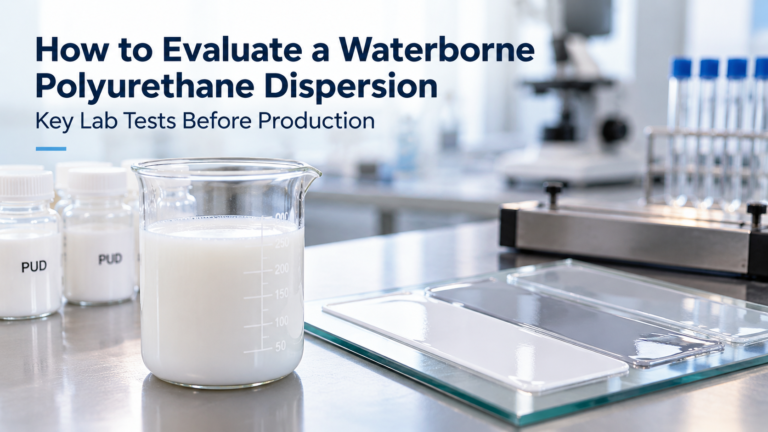
For a more reliable comparison, manufacturers should conduct application-specific testing, including:
- Adhesion testing
- Tensile strength and elongation testing
- Abrasion resistance testing
- Water resistance testing
- Chemical resistance testing
- Film appearance and flexibility evaluation
- Storage stability testing
The appropriate testing methods and acceptance criteria depend on the final application.
Frequently Asked Questions (FAQs)
1. What determines the performance of waterborne polyurethane dispersions?
PUD performance depends on several factors, including polymer chemistry, particle size, solid content, pH, viscosity, additive compatibility, and film formation conditions. These factors work together to determine the final coating properties.
2. Does higher solid content mean better PUD performance?
Not necessarily. Higher solid content can reduce the amount of water that needs to evaporate during drying, but it does not automatically improve tensile strength, flexibility, adhesion, or water resistance. The polymer structure and application requirements are equally important.
3. How does polyol type affect polyurethane dispersion properties?
Different polyols provide different property combinations. Polyether polyols generally offer good flexibility and hydrolysis resistance, while polyester polyols can provide good mechanical strength and abrasion resistance. The actual performance depends on the complete polymer formulation.
4. Why is pH important in waterborne polyurethane dispersions?
pH helps maintain dispersion stability and influences compatibility with other formulation ingredients. Maintaining the recommended pH range is important for preventing instability and ensuring consistent processing.
5. Can additives improve waterborne polyurethane performance?
Yes. Crosslinkers, wetting agents, defoamers, and other additives can improve specific properties. However, compatibility must be evaluated because unsuitable additives may cause coagulation, viscosity changes, or reduced storage stability.
6. Why does drying temperature affect PUD coating performance?
Drying temperature influences water evaporation and polymer particle coalescence. Unsuitable drying conditions may prevent the formation of a uniform film and negatively affect adhesion, flexibility, and resistance properties.
7. How can manufacturers choose the right PUD for their application?
Manufacturers should identify their required coating properties, production process, substrate, and drying conditions. They should then compare suitable PUD technical specifications and conduct laboratory application tests before selecting a product for commercial production.
Conclusion
Evaluating polyurethane dispersion properties under actual application conditions is essential for selecting the right PUD for each industrial requirement.
The performance of waterborne polyurethane dispersions is influenced by multiple interconnected factors, including polymer chemical structure, particle size, solid content, pH, viscosity, additive compatibility, and drying conditions.
No single specification can fully predict the performance of a PUD in every application.
For manufacturers and formulators, the most effective approach is to select a polyurethane dispersion based on the intended end use, evaluate its compatibility with the complete formulation, and conduct practical application testing under actual production conditions.
Working with an experienced PUD manufacturer can also help simplify material selection and improve formulation development.
Looking for the Right Waterborne Polyurethane Dispersion?
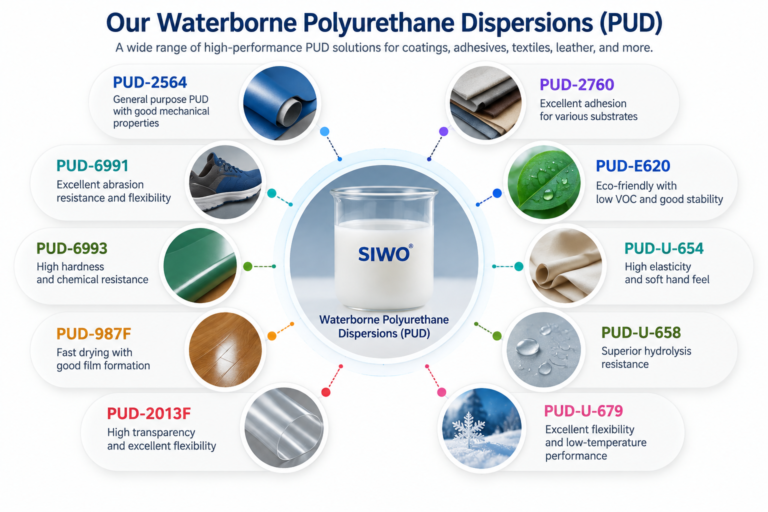
At SIWO US Inc., we specialize in the development and supply of waterborne polyurethane dispersions for various industrial applications.
Our product portfolio includes different polyurethane chemistries and performance characteristics designed to meet diverse formulation and coating requirements.
Whether you are looking for improved flexibility, adhesion, abrasion resistance, water resistance, or other specific coating properties, our team can help you identify suitable PUD solutions for evaluation.
Contact SIWO US Inc. to discuss your application requirements or request product samples for testing.