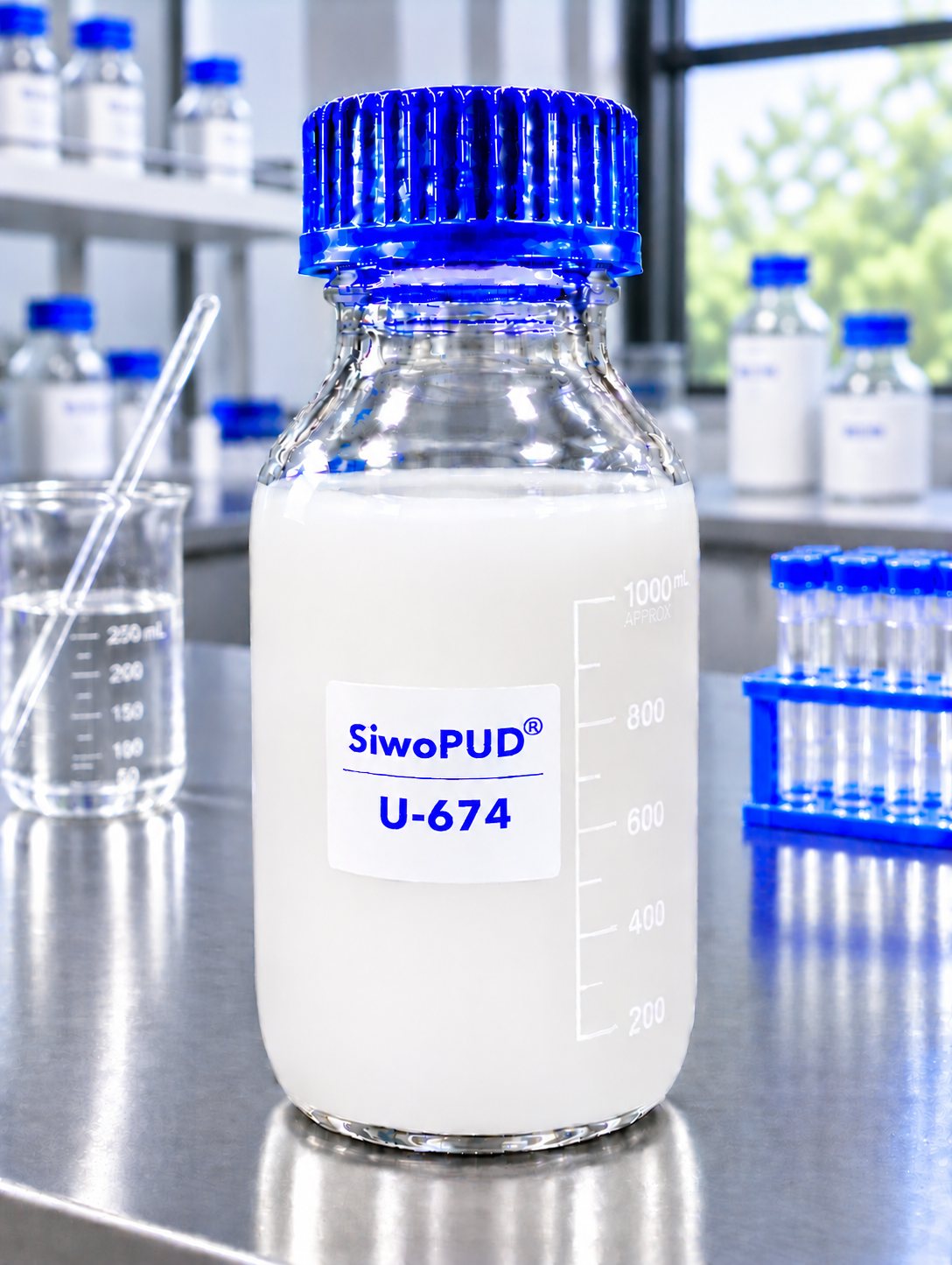
500 G/1 KG bottle, 200 KG plastic drum, 1 MT container
SiwoPUD®-U-674 is a non-crystalline, aliphatic polyester waterborne polyurethane dispersion developed for high-performance polyurethane adhesive applications. It provides outstanding bonding performance on a wide range of synthetic and natural materials. Compared with U-654 and U-656, U-674 offers better flexibility and adhesion, making it suitable for demanding bonding applications.
U-674 is particularly suitable for semi-dry bonding and wet bonding. For heat-activated bonding, a temperature of 80–90°C or higher is recommended to ensure sufficient activation of the dried adhesive layer. The actual activation temperature depends on applied pressure, pressure duration, and the substrates being bonded.
Adding 2–5% water-dispersible polyisocyanate hardener, such as SIWO EC-600, can significantly improve high-temperature bonding resistance. Products stored for more than six months should only be used after passing the relevant tests.
SiwoPUD®-U-674 is a non-crystalline, aliphatic polyester waterborne polyurethane dispersion developed for polyurethane adhesive applications.
U-674 offers outstanding bonding performance on synthetic and natural materials. Compared with U-654 and U-656, it provides better flexibility and adhesion.
U-674 is particularly suitable for semi-dry bonding and wet bonding applications. It can also be used for heat-activated bonding.
For heat-activated bonding, a temperature of 80–90°C or higher is recommended to ensure sufficient activation of the dried adhesive layer. The actual temperature depends on applied pressure, pressure duration, and the substrates being bonded.
Yes. Adding 2–5% water-dispersible polyisocyanate hardener, such as SIWO EC-600, can significantly enhance high-temperature bonding resistance.
Products stored for more than six months should only be used after passing the relevant tests.
High-performance polyurethane dispersions backed by consistent quality and technical support
Join our mailing list to stay in the loop with our latest product news.