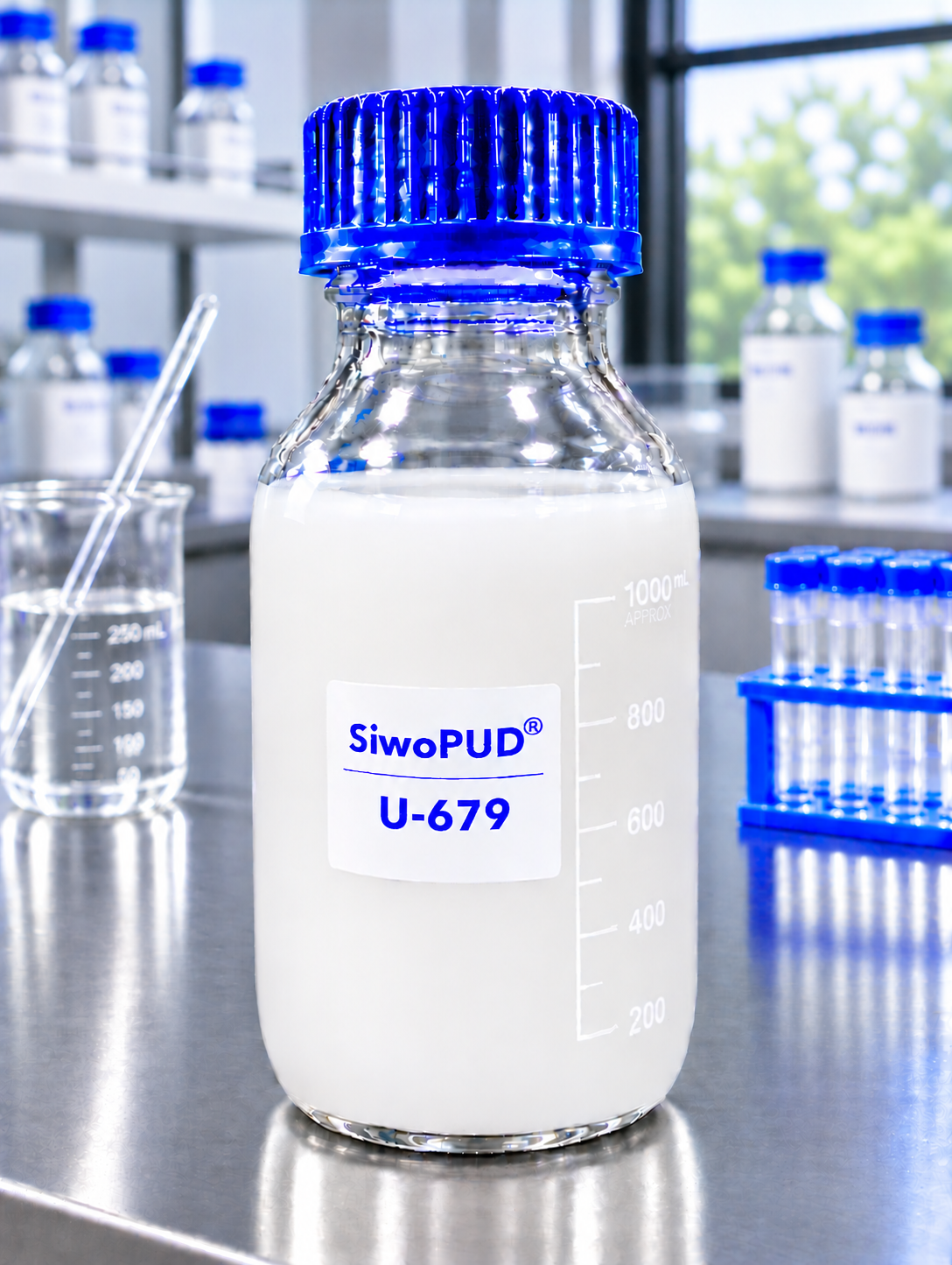
500 G/1 KG bottle, 200 KG plastic drum, 1 MT container
SiwoPUD®-U-679 is an anionic, high-molecular-weight, non-crystalline, polycarbonate-based waterborne polyurethane dispersion developed for high-performance heat-activated polyurethane adhesives. It provides excellent flexibility, initial tack, anti-blocking properties, and high bonding strength, with strong adhesion to a wide range of synthetic and natural materials.
U-679 is suitable for heat-activated bonding, semi-dry bonding, and wet bonding applications involving fabrics, leather, packaging materials, and other substrates. Compared with U-658 and U-676, U-679 offers improved hydrolysis resistance and aging resistance, supporting long-term bonding durability.
For heat-activated bonding, the recommended activation temperature is 130–140°C or higher to ensure full activation of the dried adhesive layer. The actual temperature depends on applied pressure, dwell time, and the substrates being bonded. Adding 2–5% water-dispersible polyisocyanate curing agent, such as SIWO EC-600, can significantly enhance high-temperature bonding performance.
U-679 also offers good compatibility with other waterborne resins, including slightly acidic resins and substances. Products stored for more than 12 months should only be used after passing relevant tests.
SiwoPUD®-U-679 is a non-crystalline, polycarbonate-based waterborne polyurethane dispersion developed for polyurethane adhesive applications.
U-679 offers excellent adhesive film flexibility and adhesion, along with improved hydrolysis resistance and aging resistance compared with the polyester-based polyurethane adhesives in this product series.
U-679 provides excellent bonding performance on a wide range of synthetic and natural materials.
U-679 is particularly suitable for semi-dry bonding and wet bonding applications.
Yes. U-679 can also be used for thermal activation bonding. A temperature of 80–90°C or higher is recommended for this application.
Compared with the polyester-based polyurethane adhesives in this product series, U-679’s polycarbonate-based structure provides better hydrolysis resistance and aging resistance.
High-performance polyurethane dispersions backed by consistent quality and technical support
Join our mailing list to stay in the loop with our latest product news.